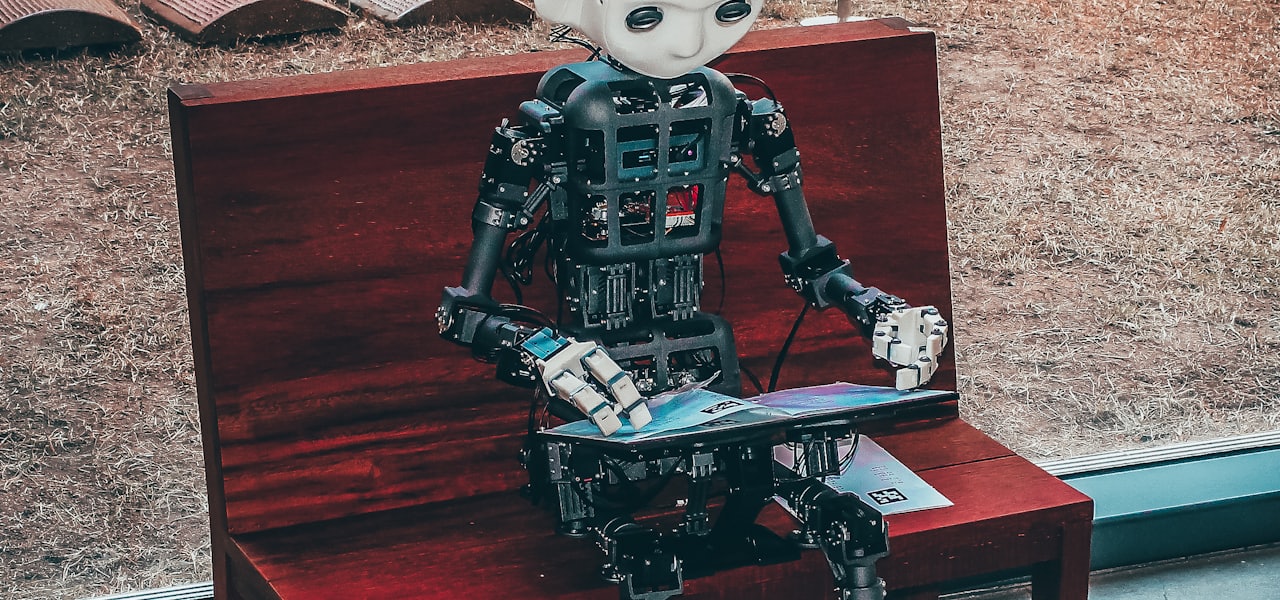
Pietro Perona (born 3 September 1961) is an Italian-American educator and computer scientist. He is the Allan E. Puckett Professor of Electrical Engineering and Computation and Neural Systems at the California Institute of Technology and director of the National Science Foundation Engineering Research Center in Neuromorphic Systems Engineering. He is known for his research in computer vision and is the director of the Caltech Computational Vision Group. == Academic biography == Perona obtained his D.Eng. in electrical engineering cum laude from the University of Padua in 1985 and completed his Ph.D. at the University of California, Berkeley in 1990. His dissertation was titled Finding Texture and Brightness Boundaries in Images, and his adviser was Jitendra Malik. In 1990, Perona was a postdoctoral fellow at the International Computer Science Institute at Berkeley. From 1990 to 1991, he was a postdoctoral fellow at the Massachusetts Institute of Technology in the Laboratory for Information and Decision Systems. He has been on the faculty of the California Institute of Technology since 1991, and he was named Allan E. Puckett Professor in 2008. == Research == Perona’s research focuses on the computational aspects of vision and learning. He developed the anisotropic diffusion equation, a partial differential equation that reduces noise in images while enhancing region boundaries. He is currently interested in visual recognition and in visual analysis of behavior. Perona and Serge Belongie lead the Visipedia project, which facilitates research on visual knowledge representation, visual search, and human-in-the-loop machine learning systems. Perona pioneered the study of visual categorization (including the publication of the Caltech 101 dataset) for which he was awarded the Longuet-Higgins Prize in 2013. He is also the recipient of the 2010 Koenderink Prize for Fundamental Contributions in Computer Vision, the 2003 Conference on Computer Vision and Pattern Recognition best paper award, and a 1996 NSF Presidential Young Investigator Award. == Media coverage == Perona has been quoted or had his research featured in various national media outlets, including the New York Times, Science Friday, The New Yorker, and the Los Angeles Times. In 2003, Perona and Stephen Nowlin organized the NEURO art exhibition, which brought together contemporary artists and scientists to explore neuromorphic engineering.
Spotify Kids
Spotify Kids is a Swedish kid-friendly Music streaming service developed by Spotify. It offers curated content for children, including music, audiobooks, lullabies, and bedtime stories, while providing their parents with parental controls. The service is only available to subscribers to Spotify's Premium Family subscription plan. == Function == Spotify Kids is a Swedish Kid-friendly Music Streaming Service that allows children to browse Spotify with parental controls. Using the app, parents can view their children's listening history, block specific songs, and share playlists with their children. The app also includes sing-along songs, playlists designed for young children, and curated audiobooks, lullabies, and bedtime stories. Access is included in Spotify's Premium Family subscription plan, and is exclusive to subscribers to the plan. Users can configure the app for a specific age group upon first launch. The playlists on Spotify Kids are curated by groups including Discovery Kids, Nickelodeon, Universal Pictures, and The Walt Disney Company. All content on the Spotify Kids app is curated by editors. As of March 2021, there were roughly 8,000 songs available on the platform. The design of the Spotify Kids app is colorful, and user interface varies depending on the age group for which the app is configured. Spotify Kids is designed to comply with consent and data collection regulations for apps used by children. TechCrunch explains that it is "designed on a grand scale to drive subscriptions to Spotify's top-tier $14.99-per-month Premium Family Plan." == Release == After being beta tested in Ireland in October 2019, it was released as a beta across the United Kingdom on February 11, 2020. It was later released in Sweden, Denmark, Australia, New Zealand, Mexico, Argentina, and Brazil. On March 31, 2021, it was made available in France, Canada, and the United States.
Outline of telecommunication
The following outline is provided as an overview of and topical guide to telecommunication: Telecommunication – the transmission of signals over a distance for the purpose of communication. In modern times, this process almost always involves the use of electromagnetic waves by transmitters and receivers, but in earlier years it also involved the use of drums and visual signals such as smoke, fire, beacons, semaphore lines and other optical communications. == Modes of telecommunication == E-mail Fax Instant messaging Radio Satellite SMS Telegraphy Telephony Television Television broadcasting mobile telephony Videoconferencing VoIP Voicemail == Types of telecommunication networks == Telecommunications network Computer networks ARPANET Ethernet Internet Wireless networks Public switched telephone networks (PSTN) Packet switched networks Radio network Broadband Wireless Broadband == Aspects of telecommunication transmission == Telecommunication Analog Digital Functional profile Optics === Telecommunication technology === Modulation Amplitude modulation Frequency modulation Quadrature amplitude modulation Nyquist rate Nyquist ISI criterion Pulse shaping Intersymbol interference === Communications media types === Physical media for Telecommunication Twisted pair Coaxial cable Optical fiber Telecommunication through Free Space Broadcast radio frequency including television and radio Line-of-sight Communications satellite Terrestrial Microwave Wireless LAN === Relationship between media and transmitters === Physical access to media Simplex Duplex (telecommunications) Logical relationships Return channel Two-way alternating Two-way simultaneous === Multiple access to media === Multiplexing Analog Frequency division multiplexing Space division multiplexing Digital Time-division multiplexing Statistical multiplexing and Packet switching Media Access Control Contention Token-based Centralized token control Distributed token control == History of telecommunication == History of telecommunication History of telegraphy History of the telephone Invention of the telephone Timeline of the telephone History of radio History of television History of videophones History of mobile phones History of computing hardware History of the Internet == Major telecommunications equipment manufacturers == Alcatel-Lucent – French global telecommunications equipment company Aricent – Former company AT&T – American telecommunications company Avaya – American technology company Ciena – American telecommunications company Cisco Systems – American multinational technology companyPages displaying short descriptions of redirect targets Ericsson – Swedish multinational networking and telecommunications company Fujitsu – Japanese multinational technology company HCL Technologies – Indian multinational technology companyPages displaying short descriptions of redirect targets Huawei – Chinese multinational technology company NEC – Japanese technology corporation Nokia – Multinational data networking and telecommunications equipment company ShoreTel – US telecommunications company Verizon – American telecommunications company ZTE – Chinese telecommunications company == Major telecommunications service providers == List of mobile network operators List of telephone operating companies == Telecommunication organizations == Alliance for Telecommunications Industry Solutions Telecommunications Industry Association == Telecommunication publications == Magazines Billing and OSS World Cabling Installation & Maintenance Call Center Communications News Communications System Design Lightwave Mobile Radio Technology (MRT) New Telephony Phone+ RCR Wireless News Telecom Asia Telecommunications Magazine Telephony WhatSatphone Magazine Wireless Systems Design Wireless Week Xchange == Persons influential in telecommunication == Edwin Howard Armstrong – American radio-frequency engineer and inventor (1890–1954) John Logie Baird – Scottish inventor (1888–1946) Paul Baran – American-Jewish engineer (1926–2011) Alexander Graham Bell – Inventor of the telephone (1847–1922) Tim Berners-Lee – English computer scientist (born 1955) Jagadish Chandra Bose – Physicist, biologist and botanist (1857–1937) Vint Cerf – American computer scientist and Internet pioneer (born 1943) Claude Chappe – Late 18th-century French inventor Donald Davies – British computer scientist (1924–2000) Louis Pouzin – French computer scientist and Internet pioneer (born 1931) Lee de Forest – American inventor (1873–1961) Philo Farnsworth – American inventor (1906–1971) Reginald Fessenden – Canadian-American electrical engineer and inventor (1866–1932) Elisha Gray – American electrical engineer (1835–1901) Innocenzo Manzetti – Italian inventor (1826–1877) Guglielmo Marconi – Italian radio-frequency engineer and inventor (1874–1937) Antonio Meucci – Italian inventor (1808–1889) Alexander Stepanovich Popov – Russian physicist (1859–1906)Pages displaying short descriptions of redirect targets Johann Philipp Reis – German scientist and inventor Almon Brown Strowger – American inventor of the telephone exchange (1839–1902) Nikola Tesla – Serbian-American engineer and inventor (1856–1943) Camille Tissot – French physicist (1868–1917) Alfred Vail – 19th-century American machinist and inventor Charles Wheatstone – English physicist and inventor (1802–1875) Vladimir K. Zworykin – Russian-American engineer (1888–1982)
Creator economy
The creator economy, also known as influencer economy, is a platform-driven economy in which creators produce content, products, or services and distribute them directly to their audience through social media platforms and emerging technologies. This economic model is based on the ability of creators to build and maintain communities of users, monetizing their creative activity through multiple channels including advertising, sponsorships, product sales, crowdfunding, and subscription-based services. Creators include various professional categories such as social media influencers, YouTubers, bloggers, artists, online educators, podcasters, and independent professionals, who use platforms as infrastructure to reach their audience without necessarily relying on traditional intermediaries in the cultural and media industry. According to Goldman Sachs Research, the ongoing growth of the creator economy will likely benefit companies that possess a combination of factors, including a large global user base, access to substantial capital, robust AI-powered recommendation engines, versatile monetization tools, comprehensive data analytics, and integrated e-commerce options. Examples of creator economy software platforms include YouTube, TikTok, Instagram, Facebook, Twitch, Spotify, Substack, OnlyFans and Patreon. == History == The term "creator" was coined by YouTube in 2011 to be used instead of "YouTube star", an expression that at the time could only apply to famous individuals on the platform. The term has since become omnipresent and is used to describe anyone creating any form of online content. A number of platforms such as TikTok, Snapchat, YouTube, and Facebook have set up funds with which to pay creators. == Criticism == The large majority of content creators derive no monetary gain for their creations, with most of the benefits accruing to the platforms who can make significant revenues from their uploads. As few as 0.1% of creators are able to earn a living through their channels.
Mediated intercultural communication
Mediated intercultural communication is digital communication between people of different cultural backgrounds. Media include social networks, blogs and conferencing services. Digital communication is distinct from traditional media, creating new avenues for intercultural communication. User take online classes; post, consume and comment on others content; and play multi-player video games. This creates spaces to form virtual communities that can ease communication across boundaries of space, time and culture. New media technologies can change culture in positive ways or become a tool of repression. == History == Intercultural communication is as ancient as human movement in search of food sources. The systematic study of intercultural communication began with Edward Hall's labor at the Foreign Service Institute, and the publication of his The Silent Language (1959). Later research, primarily focused on face-to-face communication in various areas such as interpersonal, group, and organizational and cultural identity. International and development media have been studied under the umbrella of international communication. Media imperialism, cultural imperialism and dependency theories inform this research. Mediated intercultural communication examines the bidirectional relationships between media and intercultural communication.
Situated approach (artificial intelligence)
In artificial intelligence research, the situated approach builds agents that are designed to behave effectively successfully in their environment. This requires designing AI "from the bottom-up" by focussing on the basic perceptual and motor skills required to survive. The situated approach gives a much lower priority to abstract reasoning or problem-solving skills. The approach was originally proposed as an alternative to traditional approaches (that is, approaches popular before 1985 or so). After several decades, classical AI technologies started to face intractable issues (e.g. combinatorial explosion) when confronted with real-world modeling problems. All approaches to address these issues focus on modeling intelligences situated in an environment. They have become known as the situated approach to AI. == Emergence of a concept == === From traditional AI to Nouvelle AI === During the late 1980s, the approach now known as Nouvelle AI (Nouvelle means new in French) was pioneered at the MIT Artificial Intelligence Laboratory by Rodney Brooks. As opposed to classical or traditional artificial intelligence, Nouvelle AI purposely avoided the traditional goal of modeling human-level performance, but rather tries to create systems with intelligence at the level of insects, closer to real-world robots. But eventually, at least at MIT new AI did lead to an attempt for humanoid AI in the Cog Project. === From Nouvelle AI to behavior-based and situated AI === The conceptual shift introduced by nouvelle AI flourished in the robotics area, given way to behavior-based robotics (BBR), a methodology for developing AI based on a modular decomposition of intelligence. It was made famous by Rodney Brooks: his subsumption architecture was one of the earliest attempts to describe a mechanism for developing BBAI. It is extremely popular in robotics and to a lesser extent to implement intelligent virtual agents because it allows the successful creation of real-time dynamic systems that can run in complex environments. For example, it underlies the intelligence of the Sony Aibo and many RoboCup robot teams. Realizing that in fact all these approaches were aiming at building not an abstract intelligence, but rather an intelligence situated in a given environment, they have come to be known as the situated approach. In fact, this approach stems out from early insights of Alan Turing, describing the need to build machines equipped with sense organs to learn directly from the real-world instead of focusing on abstract activities, such as playing chess. == Definitions == Classically, a software entity is defined as a simulated element, able to act on itself and on its environment, and which has an internal representation of itself and of the outside world. An entity can communicate with other entities, and its behavior is the consequence of its perceptions, its representations, and its interactions with the other entities. === AI loop === Simulating entities in a virtual environment requires simulating the entire process that goes from a perception of the environment, or more generally from a stimulus, to an action on the environment. This process is called the AI loop and technology used to simulate it can be subdivided in two categories. Sensorimotor or low-level AI deals with either the perception problem (what is perceived?) or the animation problem (how are actions executed?). Decisional or high-level AI deals with the action selection problem (what is the most appropriate action in response to a given perception, i.e. what is the most appropriate behavior?). === Traditional or symbolic AI === There are two main approaches in decisional AI. The vast majority of the technologies available on the market, such as planning algorithms, finite-state machines (FSA), or expert systems, are based on the traditional or symbolic AI approach. Its main characteristics are: It is top-down: it subdivides, in a recursive manner, a given problem into a series of sub-problems that are supposedly easier to solve. It is knowledge-based: it relies on a symbolic description of the world, such as a set of rules. However, the limits of traditional AI, which goal is to build systems that mimic human intelligence, are well-known: inevitably, a combinatorial explosion of the number of rules occurs due to the complexity of the environment. In fact, it is impossible to predict all the situations that will be encountered by an autonomous entity. === Situated or behavioral AI === In order to address these issues, another approach to decisional AI, also known as situated or behavioral AI, has been proposed. It does not attempt to model systems that produce deductive reasoning processes, but rather systems that behave realistically in their environment. The main characteristics of this approach are the following: It is bottom-up: it relies on elementary behaviors, which can be combined to implement more complex behaviors. It is behavior-based: it does not rely on a symbolic description of the environment, but rather on a model of the interactions of the entities with their environment. The goal of situated AI is to model entities that are autonomous in their environment. This is achieved thanks to both the intrinsic robustness of the control architecture, and its adaptation capabilities to unforeseen situations. === Situated agents === In artificial intelligence and cognitive science, the term situated refers to an agent which is embedded in an environment. The term situated is commonly used to refer to robots, but some researchers argue that software agents can also be situated if: they exist in a dynamic (rapidly changing) environment, which they can manipulate or change through their actions, and which they can sense or perceive. Examples might include web-based agents, which can alter data or trigger processes (such as purchases) over the Internet, or virtual-reality bots which inhabit and change virtual worlds, such as Second Life. Being situated is generally considered to be part of being embodied, but it is useful to consider each perspective individually. The situated perspective emphasizes that intelligent behavior derives from the environment and the agent's interactions with it. The nature of these interactions are defined by an agent's embodiment. == Implementation principles == === Modular decomposition === The most important attribute of a system driven by situated AI is that the intelligence is controlled by a set of independent semi-autonomous modules. In the original systems, each module was actually a separate device or was at least conceived of as running on its own processing thread. Generally, though, the modules are just abstractions. In this respect, situated AI may be seen as a software engineering approach to AI, perhaps akin to object oriented design. Situated AI is often associated with reactive planning, but the two are not synonymous. Brooks advocated an extreme version of cognitive minimalism which required initially that the behavior modules were finite-state machines and thus contained no conventional memory or learning. This is associated with reactive AI because reactive AI requires reacting to the current state of the world, not to an agent's memory or preconception of that world. However, learning is obviously key to realistic strong AI, so this constraint has been relaxed, though not entirely abandoned. === Action selection mechanism === The situated AI community has presented several solutions to modeling decision-making processes, also known as action selection mechanisms. The first attempt to solve this problem goes back to subsumption architectures, which were in fact more an implementation technique than an algorithm. However, this attempt paved the way to several others, in particular the free-flow hierarchies and activation networks. A comparison of the structure and performances of these two mechanisms demonstrated the advantage of using free-flow hierarchies in solving the action selection problem. However, motor schemas and process description languages are two other approaches that have been used with success for autonomous robots. == Notes and references == Arsenio, Artur M. (2004) Towards an embodied and situated AI, In: Proceedings of the International FLAIRS conference, 2004. (online) The Artificial Life Route To Artificial Intelligence: Building Embodied, Situated Agents, Luc Steels and Rodney Brooks Eds., Lawrence Erlbaum Publishing, 1995. (ISBN 978-0805815184) Rodney A. Brooks Cambrian Intelligence (MIT Press, 1999) ISBN 0-262-52263-2; collection of early papers including "Intelligence without representation" and "Intelligence without reason", from 1986 & 1991 respectively. Ronald C. Arkin Behavior-Based Robotics (MIT Press, 1998) ISBN 0-262-01165-4 Hendriks-Jansen, Horst (1996) Catching Ourselves in the Act: Situated Activity, Interactive Emergence, Evolution, and Human Thought. Cambridge, Mass.: MIT Press.
Haul video
A haul video is a video recording posted to the Internet in which a person discusses items that they recently purchased, sometimes going into detail about their experiences during the purchase and the cost of the items they bought. The posting of haul videos (or hauls) was a growing trend between 2008 and 2016. Often the items bought are books, clothing, groceries, household goods, makeup, or jewellery. == Details == The posting of haul videos grew as a trend between 2008 and 2016. By late 2010, nearly a quarter of a million haul videos had been shared on the website YouTube alone. Certain videos have each received tens of millions of views. Many young adults (mostly women) have displayed their shopping hauls, while including their beauty and design commentary in the narration. The videos are often grouped by store name or by the type of product (cosmetics, accessories, shoes, postage stamps, etc.). Before haul videos became an online trend, millions of people spent time watching other people, in technical product videos unbox their latest new gadgets and technology. The trend of "unboxing videos" had emerged during 2006. Haul videos have led to celebrity status for some people. Other haul video bloggers have entered sponsorship deals and advertising programs from major brands. The videos are rarely negative about the products being reviewed. This aspect of the genre of haul videos makes sponsorship by brand advertisers particularly appealing. Brands including J.C. Penney contacted haulers as part of their marketing efforts for Back to School 2010. Haul videos also convinced three San Francisco Bay Area area natives to launch HaulBlog–a parody site that creates fake haul videos which poke fun at the phenomenon. The site is also home to the original monthly web series "The Haul Monitor" a humorous commentary show that features haul videos from around the community. == Fashion media == Sarah Sykes and John Zimmerman of Carnegie Mellon University, HCII and School of Design wrote an article "Making Sense of Haul Videos: Self-created Celebrities Fill a Fashion Media Gap". They discuss their analysis and research project examining what makes video bloggers so popular on YouTube, as well as how it affects fashion media through the production of haul videos. == Federal Trade Commission == The United States Federal Trade Commission recently enacted laws to regulate many types of online publishers and content creators. The posted information includes blogging and podcasting in text, images, audio, and video. While any publishers (including the haul-video creators) are allowed to accept free merchandise and advertising, the gifts or payments must be fully (and clearly) disclosed to reveal being paid by a brand name, as a sponsor, to review a product. The Canadian Radio-television and Telecommunications Commission is also closely monitoring such Internet activities.